Specifically for Business Owners Doing $50K to $80K a Month Who Keep Building With AI and Have Nothing in the Bank to Show for It:
The NFIB Small Business Survey Found 30% of AI Users Gained Productivity, but Only 5% Made More Money. Busy Isn't the Same as Paid.
A New & Different Way To Get a 24-Agent AI Workforce That Turns Your Ideas Into Launched Campaigns, Working Software, and Real Revenue, for a Fraction of What One Hire Costs
There's a new and different way for you to grow past $50K to $80K a month without spending one more late night building AI stuff that never launches.
And it's very different from the chat tools you've probably burned months on, because instead of handing you another smart answer, it plugs your business into a working AI workforce: 24 agents across 8 business departments that research, plan, write, design, build, connect, and test, with a CEO agent running the whole operation and you making the calls.
Best part of all, there's no training it, no prompt-writing, and no duct-taping a memory system together so it stops getting dumber over time. It's ready out of the box.
And it works even if ChatGPT already burned you and Claude burned you right after.
That's the whole story of AI right now. Everybody's building. Almost nobody's banking. The pieces look great in the chat, but they aren't tied to a 30,000 foot view marketing strategy, so nothing launches, nothing connects, and nothing pays you back.
So, if you want to grow past $50K to $80K a month and finally make real money from all this AI, you'll want to pay close attention to what I'm about to share with you.
I've been in digital marketing since 2009, when I started as a manager at Infusionsoft. I started my own business in 2013, and I've been building marketing for businesses ever since.
I've also been using AI since the day ChatGPT came out. And I need to be straight with you about what that was like, because you've probably lived the same story.
At first I was amazed. It wrote so much, so fast. Then I noticed it getting dumber. It forgot what I told it. It forgot its own rules. It gave me information that was flat-out wrong. So I moved to Claude, and it felt better, right up until it did the exact same thing. I sat there for hours creating things with a tool that couldn't remember me and sometimes told me it had done work it never did.
When AI agents came out, I thought the answer had finally arrived. Then I looked inside. Empty shells. No real memory, no skills, no idea how I work.
So I built the missing parts myself. I built a memory system. It broke. I built another one. It broke too. I went through five memory systems that way, working 12 to 16 hours a day, 6 days a week, for months. Then I built more than 400 skills, one for each kind of real work I needed done right: research, copy, design, websites, SEO, funnels, emails, content, dashboards, software.
And then one day it all worked together. I gave it a business goal. It came back with the strategy, the copy, the design, the pages, the follow-up, all moving as one system. I remember staring at my screen saying, "oh my gosh, this is absolutely amazing."

My web company used to take a month to build a website, two months if we wrote the copy. I now do the whole thing in under a week. A full marketing campaign I used to charge $20,000 for and spend months building? Start to finish in a week.
I tested it with an alpha group, fixed the bugs, ran a beta group, and productized it as BreadHead. I built it because I got sick of AI that looks smart in the chat and leaves you with all the work after it.
Fact is... there's no better way right now for you to turn AI into launched work and real revenue than with the AI Workforce Command System.
Here's the one thing the chat tools can't fix: nothing in that chat window pays you while it sits there. The money only shows up when something launches.
The result is work that actually ships and earns: marketing that brings in customers, systems that save you money, and a business that's finally organized to grow.
Here's why that happens. Every piece BreadHead builds hangs on one strategy with one goal, so each piece has a job and a place to go. The landing page feeds the funnel. The follow-up feeds the sale. The content feeds the traffic. Nothing gets built just to sit on the shelf.
Picture what that looks like in your business a year from now. A few customer acquisition campaigns running and bringing in leads on autopilot. Content going out every week, pulling organic traffic into those funnels. Your admin work handled. Your numbers visible. Your week organized in blocks, with a couple of hours a day working ON the business and actual time to come up for air, hit the gym, and take a real lunch.
One strategy drives every piece, so that everything built has a job and a buyer at the end of it, so that you'll feel the scattered-pieces stress drain out of your week, so that you'll open your laptop the first morning and find last night's work done, connected, and waiting on your review instead of waiting on you.
Book Your Discovery Call Now.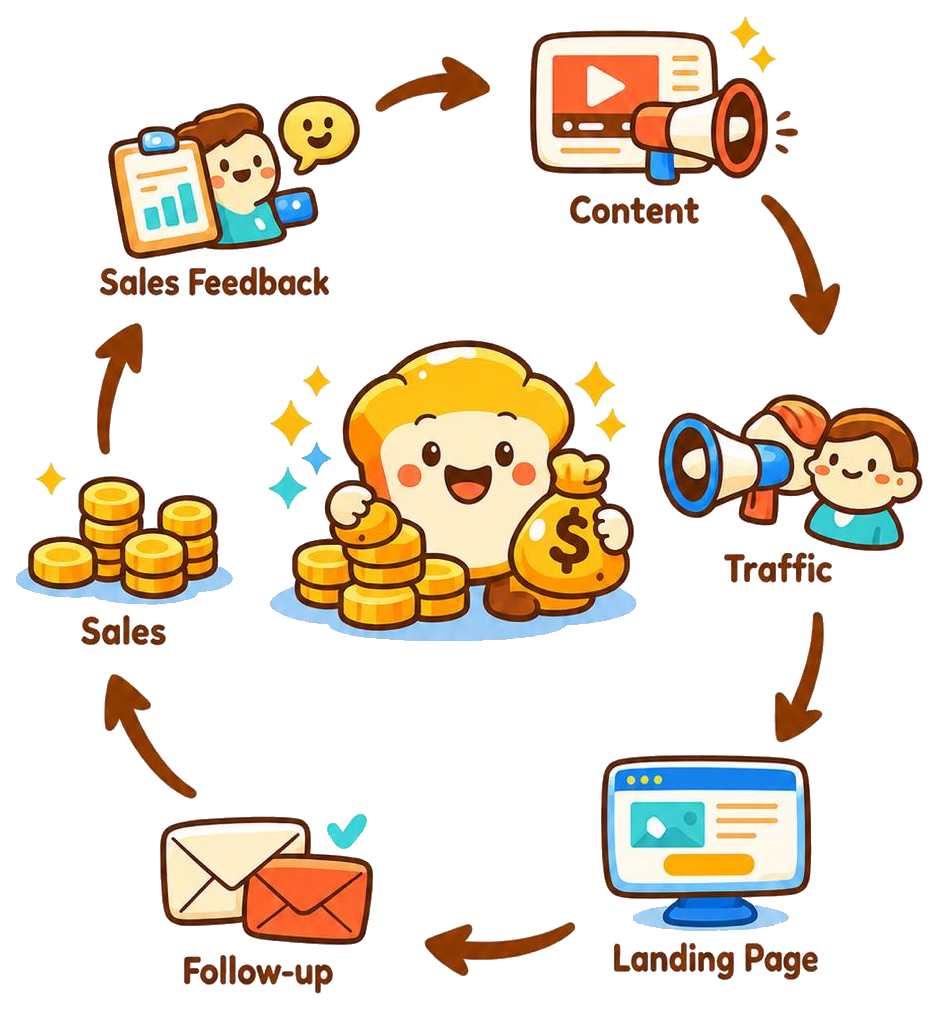
I said the same thing. But those tools build pieces, and pieces without a plan don't make money. A calculator here, a quiz there, an e-book, a half-finished course. How many of them launched? How many ever paid you a dollar?
It's a harness that can use ChatGPT or Claude as the brain, but it acts like a working team. It logs into your software. It builds websites, dashboards, and web apps. It does the jobs of a developer, a designer, a marketing strategist, and a virtual assistant, which means the work doesn't stop when the chat ends, which means the thing you asked for shows up built, already wired into your CRM, and ready for your review, which ultimately means your ideas stop dying between the plan and the launch.
It works the whole plan, so that every piece gets built, wired in, and pointed at a sale, which means you'll feel like a great hire finally showed up, and you'll watch finished work land in your review queue the first time without you touching a single piece of it.
No memory system to design. No afternoons lost figuring out why the thing forgot your brand voice again. I already burned those months for you: the five memory systems, the 400+ skills, the testing and retesting until each agent did real work the same right way every time.
One decent hire runs you thousands a month before you count the managing, the sick days, and the drama. An agency? I ran one. I charged $20,000 to build one campaign, and I wasn't the expensive guy. And the $20 chat subscription is cheap because it leaves every ounce of the real work with you.
Same system, this month, next month, and next year, getting smarter about your business the whole time instead of dumber.
You'll feel it the next time a project kicks off and you catch yourself handing off the work without the babysitting.
You talk to the CEO agent the way you'd talk to a sharp operator sitting next to you. It learns your business, your voice, your pains, and your goals. Then it plans, organizes, and delegates to 24 agents across 8 business departments: marketing, sales, development, finance, customer success, legal, product development, and HR. Each agent has its own brain, its own memory, and its own tested skills.
It researches your business, your market, your customers, and your competitors. It builds the strategy from that research. Then it writes the copy, designs and builds the pages, builds your follow-up inside your CRM, connects the software so everything actually runs, and tests the whole thing before anything goes anywhere.
Your voice, your rules, your corrections, your history. This is the part I rebuilt five times, and it's why BreadHead gets smarter about your business over time when everything else you've tried got dumber.
One conversation goes in and the CEO agent plans the work and runs all 24 agents for you, which means you'll feel like you handed the job to a team that already knows your business, and you'll get back a working, connected system while you stay on the thing only you can do.
No prompt engineering. No "reverse engineering" the magic words. Spelling doesn't even matter. Open Telegram or Slack on your phone, press the button, and talk: "Here's what I'm working on. Here's what's bugging me. What do we need to do?" It answers like a person and gets to work.
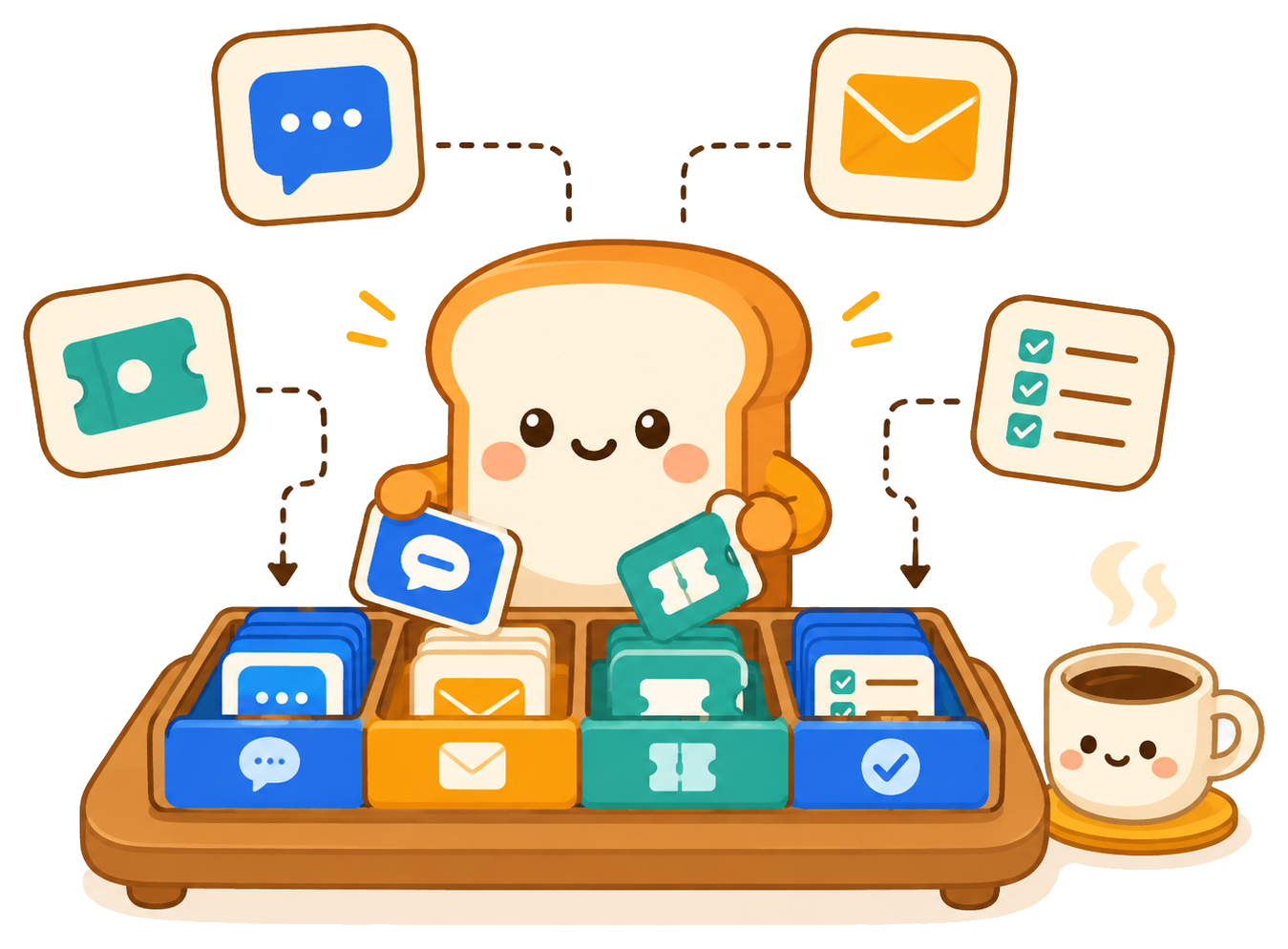
Your AI assistant goes into your Slack, your email, your ticketing system, and your project management software before you're even up. It finds the handful of things that actually matter today, drafts every reply, and skips the noise. You read, tweak, send, done.
The ritual runs before you're up and the important stuff gets sorted, drafted, and answered before your coffee's cold, and you'll feel like you got an hour of your life back before 8am, and tomorrow morning you finally come up for air instead of drowning in other people's messages.
Speed changes what you can even attempt.
Ideas used to cost me months. Now a full website takes me under a week. A complete campaign, the kind I used to charge $20,000 for, start to finish in a week. When building costs you a week instead of a quarter, you stop betting the whole year on one idea. You launch several, watch the numbers, keep the winners, and fix the rest. That's the feedback loop that actually grows a business, and it's the exact loop most owners never reach because building by hand costs too much to try twice.
That's what the successful marketers you follow are really doing. They aren't smarter. They launch faster, test more ideas, and let the market pick the winner.
Now it's your turn to play that game. Building costs a week instead of a quarter, so you can launch several ideas instead of betting the year on one, and playing at that speed feels like cheating. You'll feel it when the real numbers come back and you keep the winners, cut the losers, and stop guessing.
You stay in control the entire time.
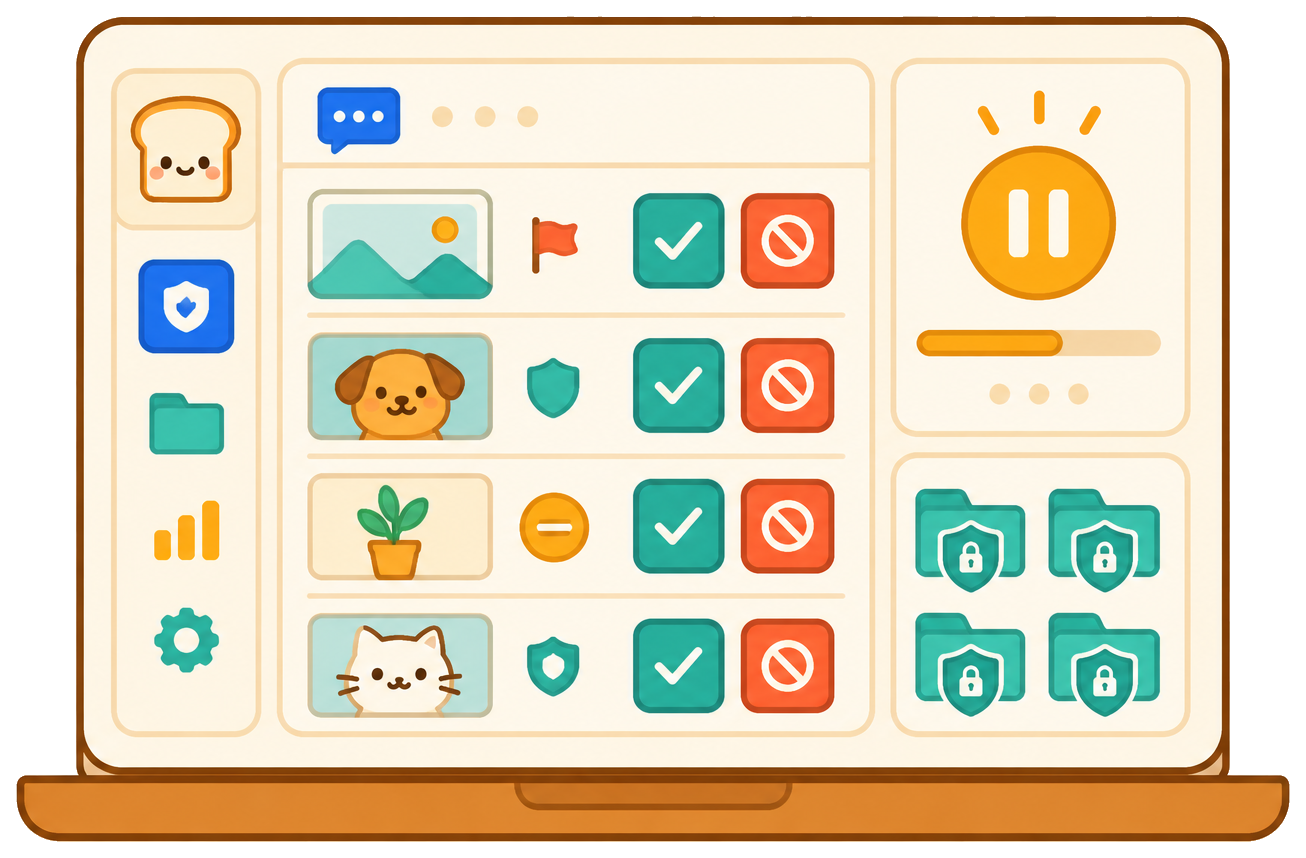
BreadHead runs on its own server, not your computer. It touches only the folder you give it. It asks for your approval on important decisions, and nothing launches until you've seen the finished work and said go yourself.
You're still the brain of the business. Think of yourself as the orchestrator: you point, it builds, you approve.
It all stops at your desk, so that nothing moves without your sign-off, so that you'll feel that calm, almost boring certainty about what's happening in your business, and you'll approve finished work instead of chasing down what some tool did behind your back. Boring is the point.
If you can tell it your pains, your frustrations, and your goals for your business, yes. That's the entire entry requirement. Bring the mess. It sorts the mess.
Go hit the bricks, shake hands, join the groups, comment, and build the relationships that get you those first clients. Come back when you've got revenue to grow.
You'll still review the work, approve the big calls, and answer its questions. AI is past its infancy, but it's still in the toddler phase of why, why, why. You're the parent with the answers. Anyone who tells you their AI needs nothing from you is lying to you.
You'll feel the relief of a straight answer after years of AI overpromises, and you'll grow on work that actually ships. What I refuse to promise is a silver bullet, because there's no silver bullet in any business. There's just work that launches and work that doesn't.
You book a discovery call. That's it.
We talk about your business, what's stuck, and what you'd build first. If it's a fit, you sign up, and onboarding feels like a good conversation: your CEO agent interviews you the way a great new hire would, learning your business, your voice, your pains, and your goals. Then you pick the first priority together and the work starts moving.
No perfect workflow required. No homework. You bring the mess you've already got, so the system has real material to work with on day one, and you'll feel like the right hire finally walked in when the first priority starts moving instead of sitting in another someday pile.
By now, you see how and why the AI Workforce Command System turns the AI you've been wrestling with into launched campaigns, working software, and real revenue. And you understand what makes it different: the strategy is built in, the memory doesn't decay, and nothing ships without your approval. That's why I want to give you the chance to put it to work in your business with BreadHead.
Let me show you everything you get.
BreadHead is your AI workforce, hired, trained, and commanded for you, for one flat monthly rate.
the one you talk to like a person, that learns your business and runs the other 24 for you. It manages the other 24 so you never have to, and the only job left on your desk is deciding and approving.
Marketing, sales, development, finance, customer success, legal, product development, and HR. Whatever the work is, there's an agent whose whole job is that work, so nothing gets forced through one generic assistant that's mediocre at everything.
Every skill is a tested, step-by-step way of doing one job right, built from 20 years of real marketing work. Your agents never start from a blank prompt, so the work comes back done the way a professional does it.
your voice, your rules, your customers, and your corrections, carried into every piece of work and compounding over time. Tell it once. It knows it forever. That's the part that took me five rebuilds to get right.
Playbook 1, Marketing Foundation: your website built, SEO'd, and GEO'd so both Google and the AI engines can find you. Playbook 2, New Customer Acquisition System: a full 30,000 foot view marketing campaign and funnel, from research to launch. Playbook 3, Content Pipeline: you record one video, and it becomes 100 assets, the shorts, the written content, the graphics, all scheduled across every platform. You hit record. It does the rest.
Every important decision and every finished piece stops at your desk before it moves. It feels like having final cut on everything your company ships. Control isn't a feature we bolted on. It's how the whole system was designed.
I'd say yes, because that's ten-plus hours a week back in your pocket. If all it did was finally launch the campaigns and systems sitting on your shelf, would it be worth it? I'd say yes, because unshipped work is the most expensive thing in your business. And if all it did was give you one place where your marketing, your software, and your follow-up actually connect, would it be worth it? Absolutely, because connected work is the work that gets you paid.
for the whole workforce. Compare that with one decent hire, who costs you more than that before benefits and management time, covers one skill instead of a department, and calls in sick. Or compare it with the $20,000 I used to charge to build one campaign by hand. And you can work in it part-time without getting nickeled and dimed on AI credits.
, because I don't do fake countdowns: there's no timer on this page and no "3 spots left." The real cost of waiting is simpler. Every week this sits, your leads keep going cold after the first call, your content doesn't get made, and the work you already paid AI to draft keeps gathering dust on the shelf.
There's no need to keep feeding hours into tools that get dumber the longer you use them.
You can change all of that today with BreadHead.